In memoriam Robert Funk Ryman
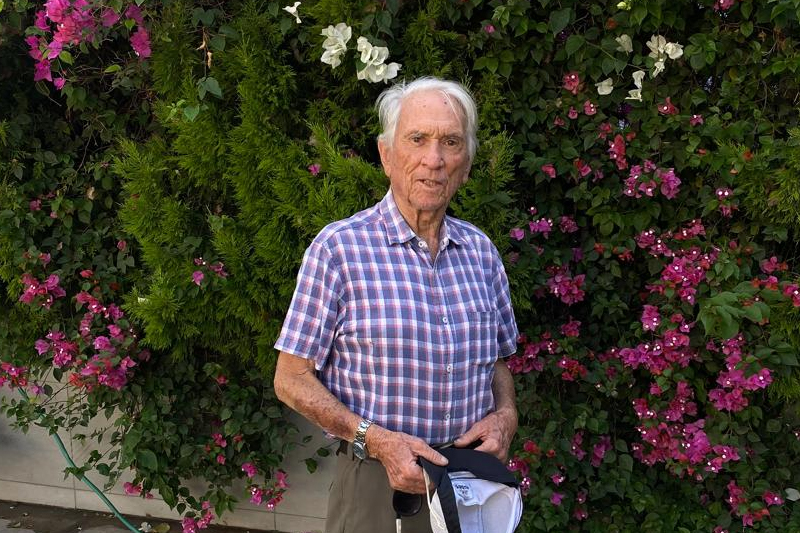
Dear friends of DIACONIA, dear Funk family:
Following the devastating Huaraz earthquake on
May 31, 1970, he was hired by the Lutheran World Federation to take charge of
the reconstruction of the affected areas in Peru. His profile and experience
fit this position perfectly. He was 37 years old at the time, spoke several
languages (German, French, English, and Spanish), was a mountaineer, a good
singer, and possessed a profound social conscience.
Robert Funk arrived in Peru in January 1971
and launched the reconstruction of the affected areas in the department of
Áncash, in coordination with the Community Development department of the
Lutheran Church.
Between 1971 and 1976, Roberto Funk—in
Spanish—led the first emergency project with dedication and energy, rebuilding
irrigation canals, bridges, drinking water networks, and schools in Áncash. The
works were executed at the communal level: the Church provided materials and
technical advice, while the community provided unskilled labor.
The project continued between 1977 and 1982
with various collateral activities, such as advice on crops, livestock raising,
and work with rural women. Along with the construction of dozens of schools, a
key concern arose: rural education. This gave rise to the Agricultural School
Production Units Project (UPEA), which lasted 20 years in coordination with the
Ministry of Education.
As activities in rural areas grew and diversified,
the administration outgrew the church's capacity. In January 1983, DIACONIA
(Evangelical Lutheran Evangelical Association for Community Development Help)
was established as a Peruvian NGO, with Robert Funk as a founding partner and
director until his retirement in 1997.
Roberto's forward-looking vision allowed for
the shaping of a comprehensive rural development proposal for the following
five years. Its purpose was to improve the standard of living by increasing
agricultural and forestry production and productivity, modernizing teaching in
rural schools, and promoting health and hygiene.
The decade of the 1980s was very difficult in
Peru. Shining Path had begun its armed struggle from the countryside toward the
cities. Many organizations abandoned the rural areas, but DIACONIA remained. It
did so thanks to Roberto's example and courage; the teams worked quietly
alongside the communities, shaping the future style of institutional action.
Roberto's commitment was interrupted when he
was shot during an assault to steal his truck in front of his house. He
sustained several bullet wounds to his leg and knee. Fortunately, he was able
to receive medical care in Switzerland and regain his mobility.
In the 1990s, with the pacification of the
country, new development opportunities opened up in the Andes and intervention
zones were expanded. Roberto was at the forefront of driving new challenges and
working methods. The logical framework was incorporated into planning, along
with a gender approach for women's empowerment and the need to conserve the
environment through economic and ecological zoning. The Sustainable Rural
Development Project (1991-1996) was drafted as an ecological proposal.
He was an advocate for organic agriculture in
Peru and a member of the Alternative Agriculture Action Network (RAAA), as well
as INKA-Cert, an organic production certification company. He was also
responsible for the visionary proposal to reforest the semi-arid areas of the
Cordillera Negra with deciduous fruit trees, such as apple and peach trees. The
project changed the productive profile of the area and significantly improved
the income of rural families.
The "Engineer," as he was called,
was deeply respected and loved by the rural population. He had the ability to
provide solutions to a wide variety of problems and maintained a very kind
demeanor with everyone. He knew how to listen and teach with patience. He lived
austerely, accepting whatever he was offered, both in food and lodging. He
adapted to community life, walking up to the highest areas either to search for
water sources or to supervise projects. It was said that had he run for
congressman for Áncash, he would have won the election. It is estimated that up
to one hundred thousand people benefited from DIACONIA's projects during his
administration.
As an administrator of donation funds, Roberto
instilled a very careful management of resources. Savings were made wherever
possible, but when it came to building materials or tools for the communities,
quality was never compromised. In his personal life, he was very measured; for
example, he did not allow leftovers on plates. He was a man of the field who
knew the Andes deeply thanks to his constant travels.
I worked with Roberto for 13 years, until his
retirement, in project planning and evaluation. His life was his work, to which
he dedicated all his energy, but he also had a sociable side. The trips to the
highlands that he organized for church members, often to inaugurate completed
works, were memorable.
I remember the surprise party we organized for
his 60th birthday because he did not want a celebration. It was enlivened by
the Sunicancha symphony, a well-known band from the highlands of Lima, in
gratitude for the reconstruction of their dam "from the times of the
gentiles." The party lasted until four in the morning, and he danced every
single piece without resting.
Roberto's history is also the history of
DIACONIA, and it lives on in every work completed and in every life
transformed.
Throughout his life, he also promoted other
social and educational works, such as the Peruvian Leather and Footwear
Institute in cooperation with UNI, the Johannes Gutenberg Cultural Association
in El Agustino, the Opportunities for Life Association in Huanta (Ayacucho),
and the Yanachaga Social Program in Oxapampa. He also set up libraries in
several rural schools with the support of friend teachers. He worked closely
with churches and was an active member in both the German-speaking Lutheran
church and here at Cristo Rey.
After his retirement, he spent two years in
Haiti on a mission for the Lutheran World Federation. In Lima, he continued
several activities derived from his work, either on boards of directors or in
advisory roles. He assisted German and Swiss prisoners in Peruvian jails and
generously helped many other people with his own resources. He possessed great
sensitivity toward the most vulnerable.
In these more peaceful years of retirement, he
was able to dedicate more time to his son René, reclaiming moments that he
previously had to sacrifice to prioritize the service of diaconia to the
forgotten and marginalized.
Today we give thanks to God for his life: for
his dedication, his consistency, and his deep compassion.
Thank you, Robert,
for your example,
for your service,
and for the values you sowed
for the future of DIACONIA.
Roberto,
Requiescat in Pace. Ruhe in Frieden. Rest in peace, friend and companion of the
journey.